


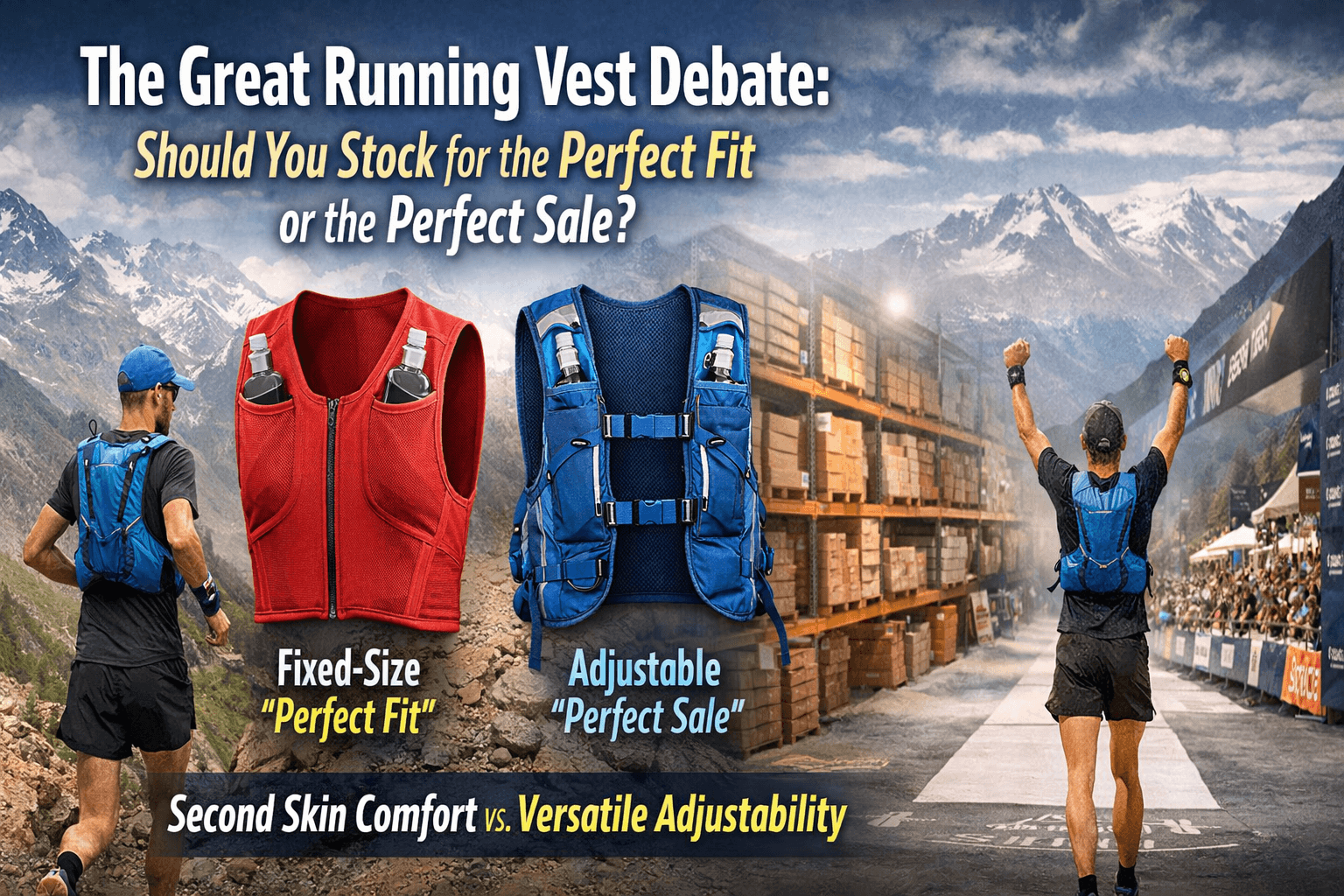
 The Great Running Vest Debate: Should You Stock for the Perfect Fit or the Perfect Sale?
If you’ve spent any time on the trails lately—or even just scrolling through Instagram—you’ve seen them. The colorful, hydration-packed vests that have become the unofficial uniform of the modern runner. Whether you are a brand manager looking to launch a new gear line or an event organizer planning the ultimate race kit, you likely have the same vision: a sea of runners wearing your logo on their back.
But before you sign that purchase order, we need to have a serious chat about construction. specifically, the “Adjustable vs. Fixed-size” dilemma.
It might feel like a minor detail—just straps versus fabric, right?—but as any veteran buyer knows, this single choice determines whether your inventory flies off the shelves or gathers dust in a warehouse corner.
The Allure of the “Second Skin” (Fixed-Size)
Let’s start with the style that usually catches the eye first: the Fixed-size Vest (Style B).
There is something undeniably sleek about these. Because they lack bulky buckles and excess straps, they fit like a favorite technical t-shirt, hugging the ribs and moving with the body rather than against it. When you see elite ultrarunners crossing finish lines at Chamonix or Western States, this is usually what they’re wearing. It screams “Pro.”
For a brand positioning itself as high-end or technical, this seems like the obvious winner. But here is where the dream meets the cold, hard reality of logistics.
Treating a backpack like a piece of clothing means you inherit all the headaches of the fashion industry. You aren’t just buying 200 units; you are committing to a matrix of Small, Medium, Large, and Extra Large. Suddenly, your Minimum Order Quantity (MOQ) isn’t just a single number—it’s a multiplier. You need 200 pieces per size.
And consider the “return rate nightmare.” A customer guesses they are a Medium, the vest arrives, and it’s just a little too tight across the chest. Back it comes. Returns due to sizing issues skyrocket with fixed-size gear, and stock turnover naturally slows down because you’re always waiting for that one specific customer who fits a size XL.
The Unsung Hero: The Adjustable Strap (Style A)
Now, look at the alternative.
If the fixed-size vest is a tailored suit, the Adjustable-strap Vest (Style A) is the drawstring pant—forgiving, flexible, and surprisingly capable.
We often think of “adjustable” as meaning “less professional,” but that’s a trap. For the vast majority of runners—the weekend warriors, the charity 5K participants, and even the mid-pack trail runners—ease of use trumps aerodynamic perfection.
From a business standpoint, this style is a breath of fresh air. It’s a “One-Size-Fits-Most” solution. You stocking risk drops through the floor because you aren’t gambling on how many smalls versus larges you might need. You buy 200 pieces in a cool color, and you’re done.
Imagine you are organizing a race. Do you really want to email 500 participants asking for their chest measurements two months in advance? Or do you want to hand them a high-quality pack at the finish line that you know will fit them right then and there?
The “Goldilocks” Decision
So, which path should you take?
It really comes down to who you are trying to impress. If your target audience is the hardcore elite who counts every gram and runs 50 miles before breakfast, the higher startup cost and inventory risk of the Fixed-size (Style B) might be the price of entry. You are paying for that premium, “technical” brand feel.
However, if you are a new seller testing the waters, or if you want a mass-market friendly product that sells easily without a complicated sizing chart, the Adjustable (Style A) is your best friend. It keeps your startup costs lower, your returns low, and your capital moving fast.
At the end of the day, the “best” vest isn’t just about what looks coolest in a photoshoot. It’s about what gets used.
Think about your own closet—how many pieces of gear do you own that are technically perfect but just too much hassle to wear? And how many simple, reliable items do you reach for every single Saturday morning?